
Winter horse nutrition is a math problem hiding under a fuzzy coat. Cold raises what your horse burns, the coat hides what he’s losing, and by the time you can count ribs in March, you’ve spent the whole season digging out. This post covers what cold does to a horse’s energy budget, why forage does the heavy lifting, and what Big Hoss adds this winter and every season after.
Winter Horse Nutrition Starts With the Energy Budget
Horses have a lower critical temperature, the point below which they burn extra calories to stay warm. University extension estimates put it between 30°F and 50°F, depending on hair coat, body condition, and how wet and windy it is. Below that line, digestible energy needs rise about 1% for every degree. A horse with a heavy winter coat (estimated critical temperature 30°F) standing in 10°F weather needs roughly 20% more energy than he did at 30°F. Wet and wind push the number higher. Treat it as an estimate, because UNL Extension’s cold-weather feeding guide gives ranges, not guarantees.
Forage Is the Furnace in Winter Horse Nutrition
Hay comes before any bucket. Utah State Extension’s guidance is that the best way to raise internal body heat while keeping intake steady is to feed more forage, and that good-quality forage can often cover the added demand without concentrates. Feed free-choice where you can. Test your hay, because stemmy, late-cut hay delivers less usable energy than the tonnage suggests.
A Winter Coat Hides Weight Loss
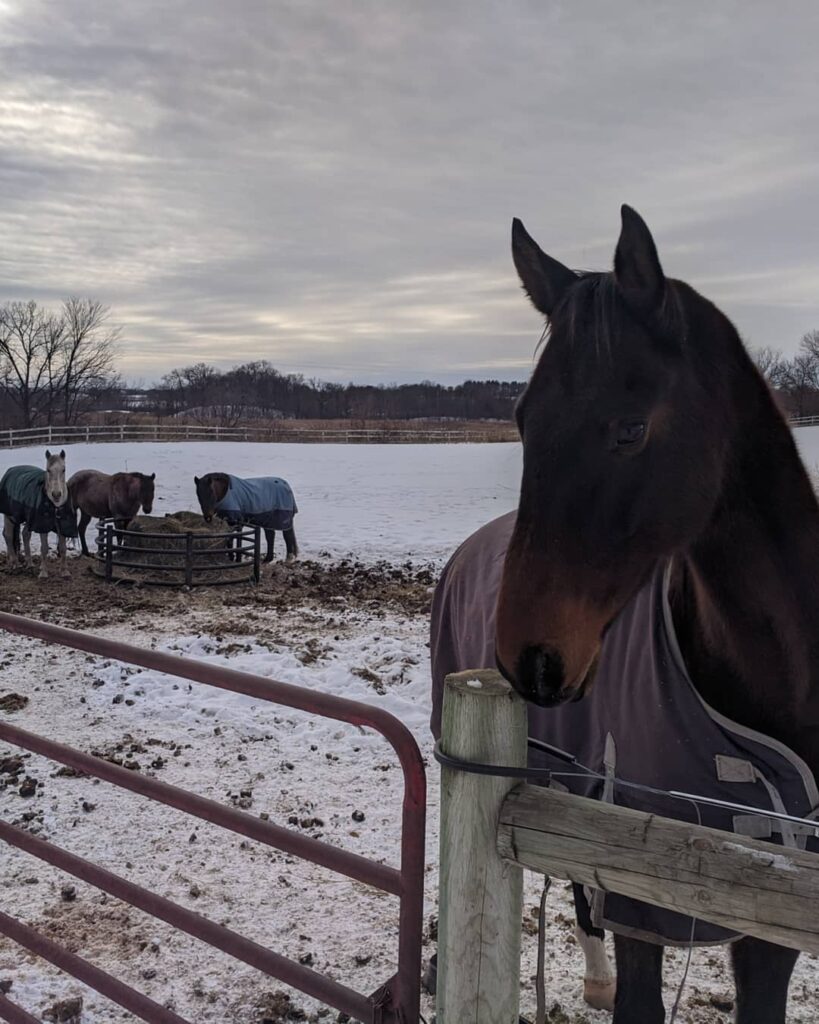
A thick coat makes a thin horse look fine from the fence. Put your hands on his ribs, withers, topline, and tailhead every couple of weeks. Extension guidance also notes it is hard to add condition to a horse during extreme cold. The time to build reserves is now, not January.
Hay Diets Tilt the Fat Balance
Growing pasture carries roughly four parts omega-3 to one part omega-6. Once pasture ends and hay takes over, that balance flips toward omega-6. Equine nutritionists recommend adding ground flax in cold seasons and on hay-based diets for exactly this reason. It’s the biggest nutritional gap a horse carries into winter, and the one hay alone can’t close.
What Big Hoss Does in Winter, and What It Doesn’t
What it does:
- Adds fat where winter needs it. Big Hoss guarantees a minimum of 25% fat on the label. Fat is the most energy-dense nutrient in the bucket, and it delivers that energy without the sugar and starch that come with grain.
- Puts the omega-3 back. It’s built on cold-milled flax with a minimum of 12% omega-3 (ALA), which offsets the omega-6 tilt of a hay-and-grain diet. Cold-milling slices the seed with an impeller: no friction, no heat, no oxidation trigger, and no stabilizers needed.
- Supports the gut under a heavier hay load. It pairs the flax with a proprietary microbial fermentation ingredient that supports native gut flora. It’s non-viable, so there’s no live culture to die in the bag, and it holds 18–24 months. University trials on this category of ingredient have shown improved nutrient digestibility, which means more value from the hay he’s already eating.
- Fits easy keepers and metabolic horses. Big Hoss runs about 5% NSC, and its calories come from fat and fiber instead of sugar and starch. You can support condition without loading him up on grain.
What it doesn’t do:
- It doesn’t replace hay. At ½ cup per 350 lbs (about 1½ cups for a 1,050-lb horse), Big Hoss is a supplement, not the calorie source that carries a horse through a cold snap. Forage does that.
- It doesn’t fix a forage shortage. A horse that isn’t getting enough hay, or is getting poor hay, will lose condition with or without it.
- It doesn’t work as an occasional addition. Feed it daily.
Start Now, and Don’t Quit in March
Coat and condition changes typically show 60 to 90 days into consistent feeding. A horse started in late October is on his way by late December, which puts the payoff in the dead of winter instead of after it. It doesn’t stop there. Joint and gut improvements can take a full feeding season, and hoof quality builds over a season too. Consistency is what produces the result, and sporadic feeding doesn’t get the same one.
The horse you bring out of winter is the horse you ride in spring. Keep Big Hoss in his bucket through spring and into riding season so the reserves you built carry into the work.
Your Winter Horse Nutrition Checklist
- Test your hay and feed free-choice where you can.
- Score body condition by hand every two weeks.
- Raise forage before concentrates as temperatures drop.
- Keep water open. Utah State notes that salt increases water consumption.
- Start Big Hoss at ½ cup per 350 lbs per day. Top-dress it and introduce it gradually over one to two weeks.
- Keep feeding it past the thaw. Riding through the cold? Read our trail horse nutrition post and our guide to flax for horses.
See What Horse Owners Are Saying
Winter is where a hard keeper shows you what’s missing. One Outlaw Feed customer’s 23-year-old gelding was struggling to hold muscle and weight on 12 pounds a day of specialty feeds and supplements. He started on Cold Milled Flax the second week of December. By early March, coming off winter, he showed drastic improvement. By early fall he looked fantastic, and his owners were able to cut back what they fed him. Big Hoss is built on that same cold-milled flax, with the gut support added.
Winter is easier on a horse that goes in with reserves and a working gut. Start Big Hoss now, read more on our customer testimonials page, explore the Outlaw Nutrition Academy, or call 612.465.0417.
When you need what’s required… Outlaw Nutrition.
FAQ
How much more should I feed my horse in winter?
Extension estimates put the rise in energy needs at about 1% per degree Fahrenheit below the horse’s lower critical temperature, which is roughly 30–50°F. Raise forage first, then adjust by body condition score. Ask your veterinarian or an equine nutritionist for specifics on your horse.
Do horses need grain in winter?
Often not. Good-quality forage can cover the added energy demand in many cases. Add concentrates only if forage alone isn’t holding condition.
Is Big Hoss okay for easy keepers and metabolic horses?
Yes. Big Hoss runs about 5% NSC, and its calories come from fat and fiber rather than sugar and starch. For any horse with a diagnosed metabolic condition, review his full ration with your veterinarian.
When should I start Big Hoss for winter?
Before the deep cold. Coat and condition changes typically show within 60–90 days of consistent daily feeding.
Should I keep feeding Big Hoss after winter?
Yes. Joint and gut improvements can take a full feeding season, and consistency is what produces them. Feeding through spring carries the reserves you built into riding season.
Is Big Hoss safe for competition horses?
Big Hoss has been screened by a HISA-accredited lab with consideration for drugs that may impact soundness, performance, or behavior under USEF, FEI, IFHA, and HIWU rules.