
An athlete’s fuel is only as good as what the body can actually use. Cold-milled flax exists because most flaxseed processing fails that test — it looks right on the label and falls apart before it ever reaches the animal. Here’s what cold-milling is, why it’s the only method that keeps the omega-3s intact, and why that matters for livestock and working dogs specifically.
The Problem With Whole or Poorly Processed Flaxseed
Flaxseed has a hard outer hull that most animals don’t break down efficiently on their own. Fed whole, it either ferments in the hindgut — generating some energy but delivering no usable fatty acids — or passes through intact. To get anything out of flaxseed, the hull has to be opened. How you open it determines whether what’s left is nutrition or filler.
Grinding vs. Cold-Milled Flax: Not the Same Process
Most processed flax is ground or crushed — mechanical force generates friction, and friction generates heat. Heat is the enemy of ALA, the omega-3 in flax. The moment heat enters the process, oxidation starts, and oxidized fatty acids don’t deliver anti-inflammatory benefit — they deliver free radicals the body has to work to neutralize.
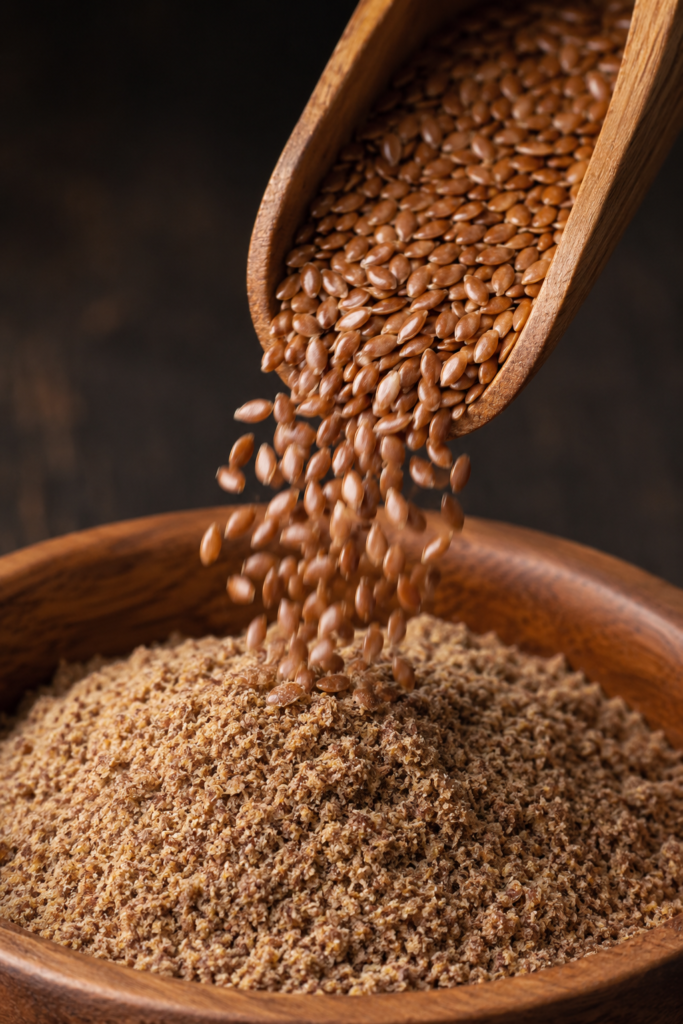
Cold-milled flax is produced differently: an impeller slices the seed open at ambient temperature. No friction, no pressure buildup, no heat event. The oil inside is never exposed to the conditions that trigger oxidation. The ALA stays structurally intact — no stabilizers or preservatives required, because there’s nothing to stabilize against.
What the Storage Research Actually Shows
This is the part most flax suppliers can’t back up. Published research on milled flaxseed storage found no significant oxidative change — measured by peroxide values, conjugated double bonds, and off-flavor compounds — over 128 days at ambient temperature, with endogenous antioxidants naturally present in the seed doing the protective work. Follow-up warehouse testing extended that stability out to 20 months under normal storage conditions.
That protection only holds if the processing step didn’t already compromise the oil before the antioxidants had a chance to work. Grinding and heat processing strip the natural defense out before the bag is sealed. Cold-milled flax keeps it in place — which is exactly why Outlaw’s products carry an 18–24 month shelf life without a single chemical stabilizer.
The Delivery System Matters as Much as the Fuel
An intact omega-3 is only half the equation. Outlaw pairs cold-milled flax with a proprietary microbial fermentation ingredient that supports native gut flora and improves nutrient digestibility — non-viable, not a live culture, stable for 18–24 months, backed by university trial data showing measurable gains in digestibility and gut bacteria counts. Cold-milling protects the fuel. The fermentation ingredient makes sure the body can actually use it.
What This Means for Livestock and Working Dogs
Livestock: For cattle and other livestock, feed efficiency and rumen health determine the return on every pound of supplement fed — and that math only works if the omega-3s reaching the rumen are still intact. Stress periods like weaning, transport, and weather transitions are exactly when a compromised fat source costs you the most. Stocked Up is built on cold-milled flax for exactly that reason.
Working and active dogs: A dog’s joints, coat, and energy reflect what’s happening at the cellular level, and cellular-level results require fatty acids that arrived intact. Unleashed applies the same standard to dogs that work for a living.
Horses: For the full breakdown of what this means for equine performance — including the calcium-phosphorus balance and competition screening — see our deep dive on flax for horses.
The Bottom Line
You can feed whole flax and watch it pass through undigested. You can feed heat-processed flax and pay for oxidized fat your animal’s body has to fight instead of using. Or you can feed cold-milled flax, where the omega-3s arrive the way nature built them, ready for a body that’s already trained to use them.
See what producers are getting from it at the Outlaw Nutrition reviews page.
When you need what’s required… Outlaw Nutrition.
FAQ:
What is cold-milled flax, and how is it different from ground flaxseed? Cold-milled flax is sliced open by an impeller at ambient temperature rather than crushed or ground. Grinding generates friction, and friction generates heat — which triggers oxidation and degrades the omega-3s before the product ever reaches the animal. Cold-milling avoids that entirely.
Why does heat matter when processing flaxseed? Heat is the trigger for oxidation in ALA, the omega-3 fatty acid in flax. Oxidized fatty acids don’t deliver the anti-inflammatory benefit they’re fed for — they produce free radicals the body has to work to neutralize instead of using them.
How long does cold-milled flax stay stable, and why doesn’t it need preservatives? Published storage research on properly milled flaxseed found no significant oxidative change for up to 128 days at ambient temperature, extending to 20 months in follow-up testing — driven by the seed’s own natural antioxidants. Because cold-milling never triggers oxidation in the first place, those antioxidants stay intact and no chemical stabilizers are needed. That’s the basis for the 18–24 month shelf life on Outlaw products.
Does cold-milled flax work the same for livestock and dogs as it does for horses? Yes — the processing science is identical across species. Cold-milling protects the omega-3s regardless of what eats them. Stocked Up and Unleashed are both built on the same cold-milling standard as Big Hoss, with dosing and delivery adjusted by species.