
Breeding season punishes weak nutrition faster than almost anything else you do all year. A stallion with sluggish sperm motility, a cow that won’t rebreed on schedule, a bitch that comes up short on milk for a big litter — these aren’t bad luck. Most of the time, they’re a fatty acid deficiency showing up at the worst possible moment. Omega-3s are required nutrients. No horse, cow, or dog can manufacture them internally, and most modern rations and kibble simply don’t supply enough to support peak reproductive performance. Here’s what the research shows about feeding for fertility — for males and females, before breeding, through gestation, and into the first weeks of a foal’s, calf’s, or puppy’s life.
Why Omega-3s Are a Breeding Nutrient, Not Just a Coat Supplement
Alpha-linolenic acid (ALA), the primary omega-3 in flax, feeds directly into the hormone pathways that drive ovulation, sperm production, and embryo survival. It also builds into the cell membranes of sperm and eggs, where membrane integrity determines whether fertilization actually holds. And because breeding, gestation, and birth are three of the most inflammatory events in an animal’s life, the anti-inflammatory effect of a properly balanced omega-3 intake isn’t a bonus — it’s load-bearing. Our cold-milled flax delivers a minimum of 12% omega-3 fatty acids as ALA, which is the foundation every Outlaw Nutrition breeding recommendation starts from.
Big Hoss: Fertility Support for Broodmares and Stallions
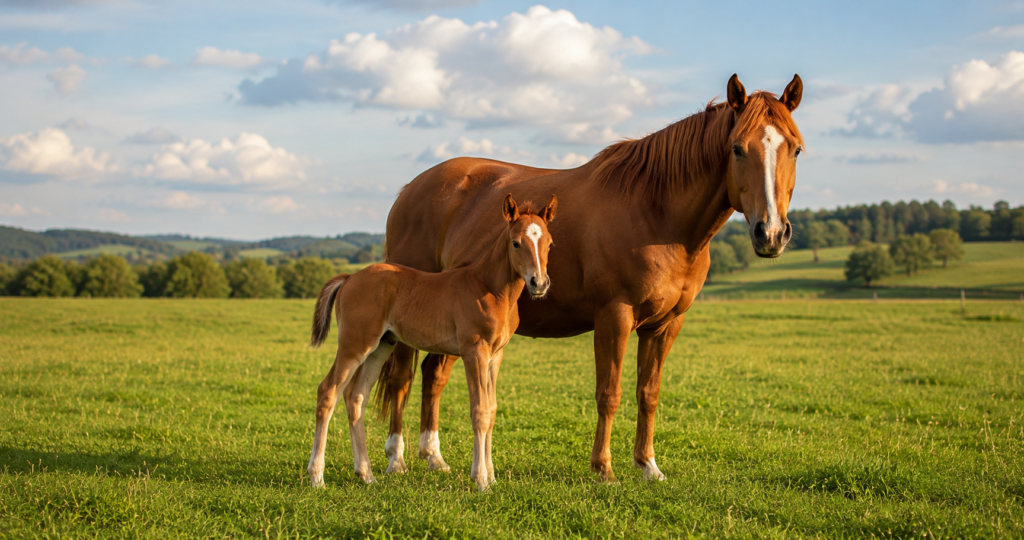
The same fatty acid biology applies whether you’re breeding a performance mare or a good trail mare, you just want to raise a solid foal. On the stallion side, university research on DHA-enriched omega-3 supplementation has been shown to improve the quality of fresh, cooled, and frozen semen — a meaningful edge for any breeding program relying on shipped or frozen collections. On the mare side, adequate ALA intake supports the hormone signaling behind follicle development and a stronger corpus luteum, the structure responsible for maintaining early pregnancy.
Big Hoss also carries natural Vitamin E as a full-spectrum D-Tocopherol complex — not the synthetic DL-Tocopheryl Acetate found in a lot of commodity mixes — an antioxidant that matters most during the oxidative stress of breeding, late gestation, and foaling. After the foal hits the ground, continuing Big Hoss through lactation supports the mare’s recovery and keeps omega-3s flowing through her milk during the foal’s most critical growth window. Built on cold-milled flax and our proprietary microbial fermentation ingredient, Big Hoss backs broodmares and stallions from cover to weaning. Shop Big Hoss →
Stocked Up: Bull Fertility, Cow Conception, and Calf Vigor
This is where the cattle data gets specific. A Kansas State University trial on breeding bulls supplemented with flaxseed and flaxseed oil found 9% greater sperm motility and 21% more normal sperm compared to an unsupplemented control group — results echoed in a Montana ranch trial that showed an 8% increase in motility and 22% more normal sperm.
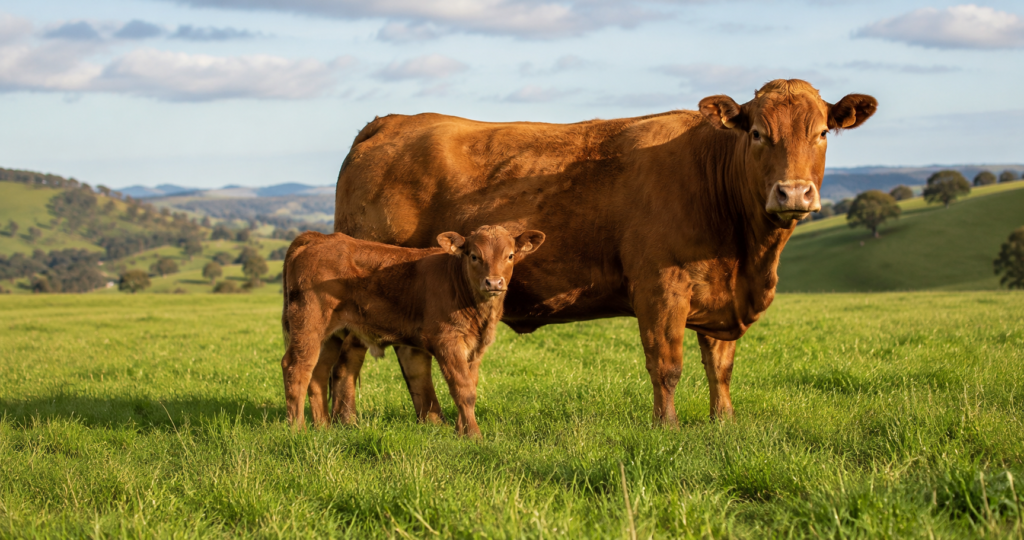
On the female side, a Canadian Dairy and Swine Research Center trial found flax-fed cows hit 87% first-service conception, compared to 50% on cows fed calcium salts of palm oil. A follow-up Alberta trial pushed the numbers further: cows fed flax for a month before breeding through 32 days post-insemination showed confirmed conception rates of 48.4% versus 32.2% on a comparable fat source, overall pregnancy loss of just 9.8% versus 27.3%, and a calving rate above 90% versus 73%.
The benefit doesn’t stop at calving. In a university trial, cows supplemented with flax through their third trimester and into calving showed nearly 20% greater ovulation within 30 days post-calving, and more than 50% more cows cycling at least 2.5 times by 60 days post-calving compared to herd controls — a direct hit on rebreeding efficiency. And in a University of Florida heifer calf trial, our proprietary microbial fermentation ingredient improved average daily gain by 18.1% and feed efficiency by 12% over the first 28 days, while separate research showed it cut E. coli levels in the calf gut to a fraction of untreated controls. Stocked Up combines that microbial fermentation ingredient with cold-milled flax to support bulls, cows, and calves through the entire breeding cycle. Shop Stocked Up →
Unleashed: Supporting Sires, Dams, and the Whelping Box
Dogs run on the same biology. ALA is just as essential for a stud dog’s sperm quality and a dam’s hormone cycling as it is for a stallion or a bull — the mechanism doesn’t change with species. What does change is the stress load a dam carries through whelping and nursing a litter, which is where the anti-inflammatory support and coat/condition benefits of a properly dosed omega-3 supplement earn their keep. Feeding through pregnancy and lactation supports the dam’s own recovery and keeps the fatty acid content of her milk higher for the litter during the fastest growth window of a puppy’s life. Shop Unleashed →
Timing Your Supplementation for Breeding Season
Nutritionist guidance on flax supplementation for reproduction points to starting 60 days before the start of breeding season for both males and females — enough lead time to influence a full spermatogenesis cycle and follicular development. Continue straight through gestation. For high-stress events layered on top of breeding — weaning, transport, extreme weather — a 28-day lead-in before the event is the standard recommendation. That same 60-day-before, straight-through-gestation, continue-after-birth framework applies across Big Hoss, Stocked Up, and Unleashed.
The Gut Health Half of the Equation
None of this works if the animal isn’t absorbing what you’re feeding. Our flax is cold-milled — sliced open by an impeller rather than ground or crushed, so there’s no friction, no heat, and no oxidation trigger. That’s what keeps the omega-3s stable and bioavailable instead of degrading in the bag or the gut. Paired with it, our proprietary microbial fermentation ingredient — non-viable, not a live probiotic, and stable for 18 to 24 months in storage — works to enhance the animal’s own native gut flora, backed by university trials showing improved nutrient digestibility and healthier rumen bacteria populations. For a pregnant or nursing female under heavy nutritional demand, and for a newborn building its digestive system from scratch, that gut health support is doing just as much work as the omega-3s themselves.
Ready for a Stronger Breeding Season?
Fertility, gestation, and offspring vigor all trace back to the same two things: consistent omega-3 intake and a gut that actually absorbs it. Big Hoss, Stocked Up, and Unleashed are built to carry your breeding program from cover to weaning, calving to rebreeding, or whelping to a sold-out litter. See what real producers and owners are saying on our customer testimonials page.
When you need what’s required… Outlaw Nutrition
Breeding Nutrition: Your Questions Answered
When should I start feeding for breeding season? Start about 60 days before the breeding season begins, for both males and females. That gives enough time to influence a full sperm production cycle and support follicle development ahead of conception.
Does this help the males, or just the females? Both. Omega-3 fatty acids support sperm motility and normal sperm morphology in stallions, bulls, and stud dogs, while also supporting hormone cycling and egg quality in females.
Is it safe to feed through pregnancy? Yes — Big Hoss, Stocked Up, and Unleashed are all-natural and formulated to be fed straight through gestation and lactation. As with any supplement, if your animal has a specific health condition, check with your veterinarian first.
Do I keep feeding after the foal, calf, or puppy arrives? Yes. Continuing through lactation supports the dam’s recovery and keeps omega-3 levels higher in her milk during the offspring’s fastest growth window.
What’s the difference between the omega-3 and the gut health ingredient? The cold-milled flax delivers the omega-3 fatty acids (a minimum of 12% ALA) that drive hormone production and anti-inflammatory support. The proprietary microbial fermentation ingredient works separately to support the animal’s native gut flora, improving nutrient digestibility and absorption — so more of what you’re feeding actually gets used.
Will this directly benefit my foal, calf, or puppy? Indirectly through the dam’s milk during nursing, and directly once they’re old enough to start on their own ration — check the product feeding guide for age and weight recommendations.